

SMB Tech & Trends

SMB Tech & Trends

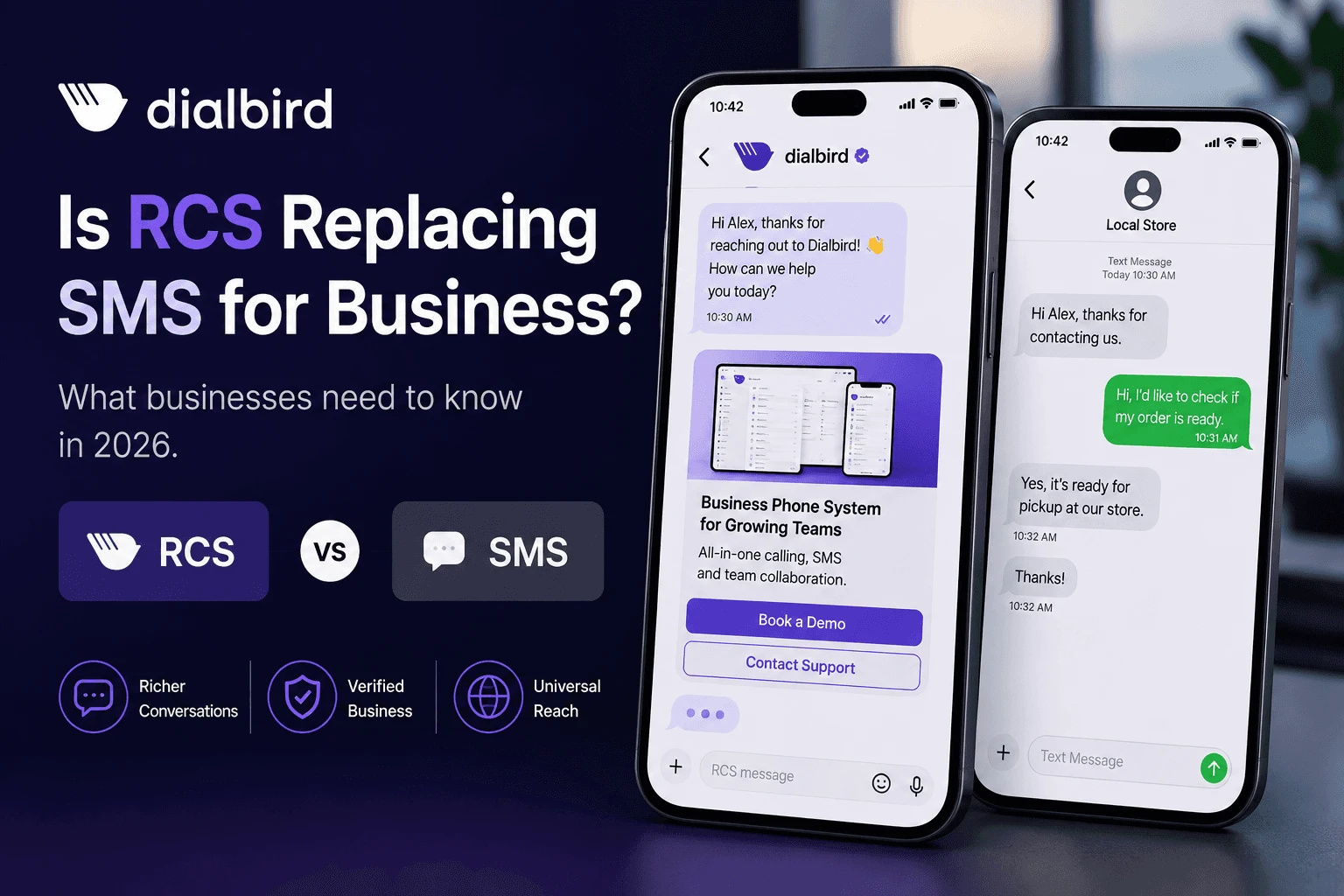
Is RCS Replacing SMS for Business?

RCS is often called the future of business messaging, but is it really replacing SMS? Learn the key differences, where RCS wins, where SMS still matters, and what businesses should use in 2026.

Omar Aboufandi

Startup & Business Growth Expert

Is RCS Replacing SMS for Business?

For years, SMS has been the default way for businesses to communicate with customers.

Appointment reminders. Delivery updates. Verification codes. Customer support. Marketing campaigns.

If a business wanted to send a text message, SMS was the obvious choice.

Then came RCS.

Google has heavily promoted it. Apple now supports it. Telecom providers talk about it as the future of messaging. Industry headlines regularly ask whether SMS is finally on its way out.

Which raises an important question for businesses.

Is RCS actually replacing SMS?

The short answer is no.

At least not yet.

RCS is growing quickly and offers a much richer experience than traditional SMS. But for most businesses in 2026, SMS remains the most reliable, universal and accessible messaging channel available.

The reality is more nuanced than the headlines suggest.

Let's break it down.

What is RCS?

RCS stands for Rich Communication Services.

Think of it as a modern upgrade to SMS.

While SMS was designed in the 1990s and supports only basic text messages, RCS adds features people have come to expect from apps like WhatsApp, iMessage and Messenger.

RCS can support:

  • Read receipts

  • Typing indicators

  • High-quality images

  • Videos

  • File sharing

  • Rich business profiles

  • Interactive buttons

  • Group conversations

  • Branded messaging experiences

Instead of feeling like a traditional text message, RCS conversations can feel much closer to a modern messaging app.

For consumers, that creates a better experience.

For businesses, it creates new opportunities to engage customers.

How RCS differs from SMS

The easiest way to understand RCS is to compare it directly with SMS. On the surface, both technologies allow businesses to send messages, but the difference is in the experience.
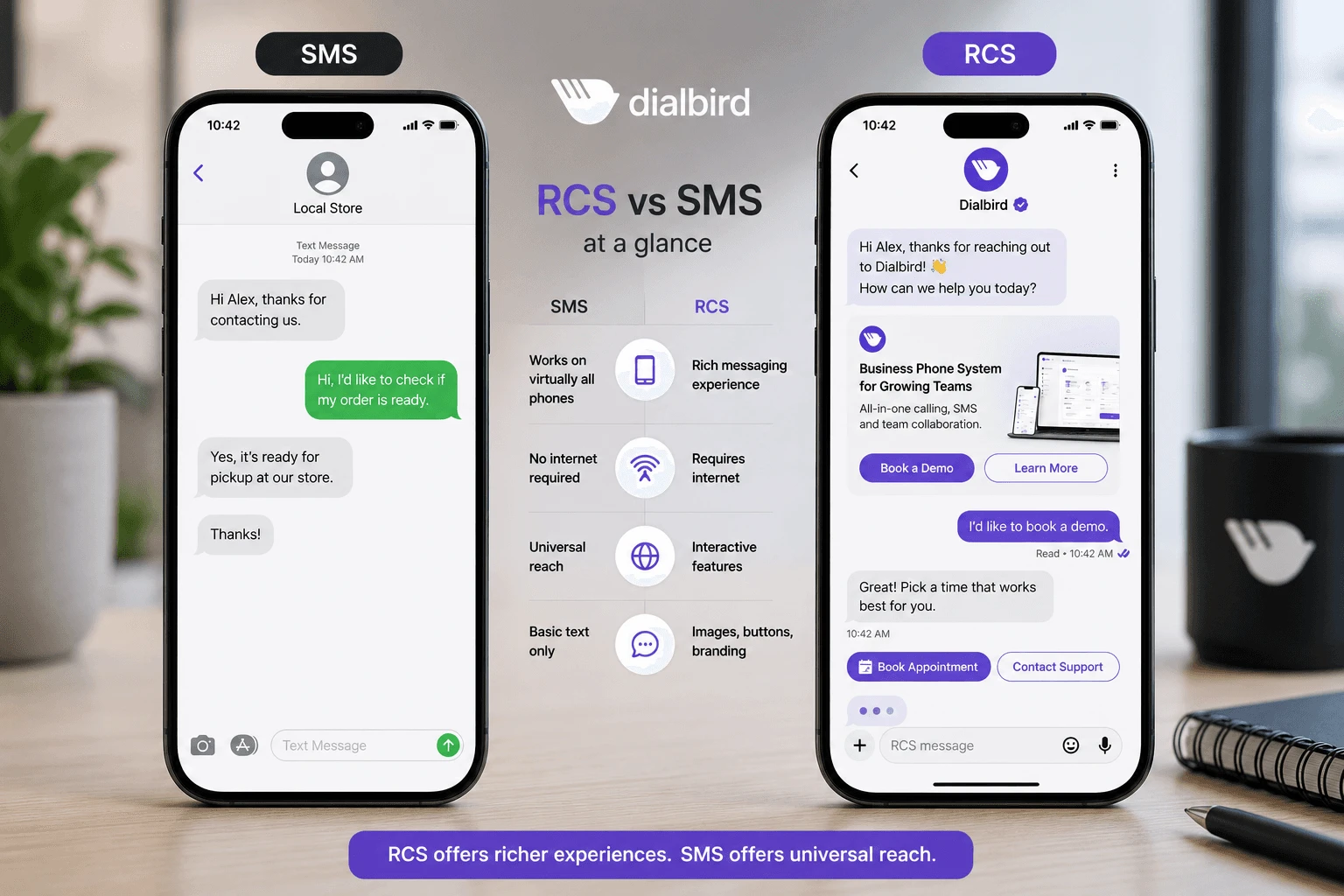


This comparison explains why RCS receives so much attention. It solves many of SMS's limitations. The challenge is that solving limitations is not the same thing as replacing a technology.


Feature

SMS

RCS

Works on virtually all phones

Yes

No

Internet required

No

Yes

Read receipts

No

Yes

Typing indicators

No

Yes

High-quality media

Limited

Yes

Interactive buttons

No

Yes

Rich branding

No

Yes

Universal reach

Yes

No

Business verification

Limited

Yes

Why SMS still dominates business messaging

Many people assume better technology automatically wins.

History suggests otherwise.

The technology that wins is often the one that works everywhere.

That is SMS's greatest advantage.

SMS works across virtually every mobile phone, network and region.

Businesses know that when they send an SMS message, it is likely to reach the recipient regardless of device, carrier or operating system.

That reliability is difficult to replace.

For business communication, reach often matters more than features.

A beautiful interactive message means very little if a customer never receives it.

Why Apple's RCS support matters

For years, one of RCS's biggest challenges was Apple.

Android devices supported RCS through Google Messages, but iPhone users remained outside the ecosystem.

That limited adoption significantly.

Apple's decision to support RCS changes the conversation.

Suddenly, businesses have access to a much larger audience.

It also creates greater confidence that RCS will continue growing over the coming years.

However, Apple's support does not automatically mean universal adoption.

There are still differences between carriers, devices and implementations that businesses need to consider.

Where RCS is genuinely better

RCS offers several advantages that SMS simply cannot match.

Rich customer experiences

Businesses can create branded conversations that feel more professional and trustworthy.

Customers can see company names, logos and verified business information.

Interactive messaging

Instead of asking customers to visit a website, businesses can provide actions directly within the conversation.

Examples include:

  • Book appointment

  • Confirm delivery

  • View product

  • Contact support

This can reduce friction and improve engagement.

Better media support

RCS allows businesses to share images, videos and files without the limitations traditionally associated with SMS.

Improved engagement tracking

Businesses can see message delivery status, read receipts and interaction data that would otherwise be unavailable through SMS.

Where RCS still falls short

Despite its advantages, RCS still faces several challenges.

Not every customer has RCS enabled

Businesses cannot assume every recipient can receive RCS messages.

Coverage continues to improve, but it is not universal.

Internet connectivity is required

Unlike SMS, RCS relies on a data connection.

Poor connectivity can affect delivery and user experience.

Business adoption remains early

Many businesses are still experimenting with RCS.

SMS infrastructure, workflows and customer expectations remain deeply embedded across industries.

Greater complexity

SMS is simple.

RCS introduces additional requirements around verification, messaging formats and compatibility.

For some businesses, that complexity may not yet justify the benefits.

Should small businesses use RCS?

Yes.

But probably not as a replacement for SMS.

At least not today.

For most small businesses, the smarter approach is:

  • Continue using SMS as a core communication channel

  • Monitor RCS adoption

  • Explore RCS opportunities where relevant

  • Prepare for future support

The businesses that benefit most from RCS today tend to be:

  • Retail brands

  • Ecommerce companies

  • Customer service teams

  • Delivery services

  • Businesses running high-volume messaging campaigns

For local service businesses, trades, agencies and many small teams, SMS remains more than sufficient for most communication needs.

Will RCS replace SMS?

Eventually, perhaps.

In the near future, probably not.

The relationship between RCS and SMS is likely to look similar to the relationship between email and chat applications.

New technology emerges.

Adoption grows.

But the older technology remains because it is universal, reliable and deeply embedded.

RCS is likely to become an important business messaging channel.

SMS is likely to remain essential for years to come.

Businesses should think of RCS as an addition rather than a replacement.

What businesses should focus on instead

Many businesses spend too much time worrying about messaging technology and not enough time improving communication.

Customers care less about whether a message arrives via SMS or RCS.

They care about:

  • Fast responses

  • Clear communication

  • Reliable updates

  • Helpful support

  • Consistent customer experiences

Whether those conversations happen through SMS, RCS or future messaging technologies, the goal remains the same.

Make communication easier for customers.

Why Dialbird supports modern business communication

At Dialbird, we focus on helping businesses manage customer communication more effectively.

That includes:

  • Business SMS

  • Business numbers

  • Shared communication

  • Team visibility

  • Customer conversations

  • Mobile and desktop access

Messaging technology will continue evolving.

The businesses that succeed will be the ones that can adapt without losing visibility, consistency or customer trust.

The channel matters.

The customer experience matters more.

Conclusion

RCS is not replacing SMS today.

It is improving business messaging and creating new opportunities for richer customer experiences.

But SMS remains the most universal and reliable messaging channel available to businesses.

For most organisations in 2026, the smartest approach is not choosing one over the other.

It is understanding where each fits.

RCS is growing.

SMS is not going away.

The future of business messaging will likely include both.

Next Step

Looking for a better way to manage business communication?

Dialbird helps businesses manage calls, SMS and customer conversations from one shared workspace.

Start your free trial today.

FAQs about RCS

What does RCS stand for?

RCS stands for Rich Communication Services, a modern messaging protocol designed to improve on traditional SMS messaging.

Is RCS replacing SMS?

No. RCS is growing rapidly, but SMS remains the most universal and widely supported business messaging channel.

Is RCS better than SMS?

RCS offers richer features such as read receipts, typing indicators and interactive messaging. However, SMS provides broader compatibility and reach.

Can businesses use RCS messaging?

Yes. Businesses can use RCS to create branded, interactive messaging experiences for customers.

Does RCS work on iPhone?

Apple now supports RCS, which has significantly increased adoption and interoperability between devices.

Should small businesses switch from SMS to RCS?

Most small businesses should continue using SMS while monitoring RCS adoption. For now, RCS is generally best viewed as a complement to SMS rather than a replacement.

Will SMS disappear?

There is currently no indication that SMS will disappear in the near future. Its universal reach continues to make it valuable for businesses worldwide.


Is RCS Replacing SMS for Business?

For years, SMS has been the default way for businesses to communicate with customers.

Appointment reminders. Delivery updates. Verification codes. Customer support. Marketing campaigns.

If a business wanted to send a text message, SMS was the obvious choice.

Then came RCS.

Google has heavily promoted it. Apple now supports it. Telecom providers talk about it as the future of messaging. Industry headlines regularly ask whether SMS is finally on its way out.

Which raises an important question for businesses.

Is RCS actually replacing SMS?

The short answer is no.

At least not yet.

RCS is growing quickly and offers a much richer experience than traditional SMS. But for most businesses in 2026, SMS remains the most reliable, universal and accessible messaging channel available.

The reality is more nuanced than the headlines suggest.

Let's break it down.

What is RCS?

RCS stands for Rich Communication Services.

Think of it as a modern upgrade to SMS.

While SMS was designed in the 1990s and supports only basic text messages, RCS adds features people have come to expect from apps like WhatsApp, iMessage and Messenger.

RCS can support:

  • Read receipts

  • Typing indicators

  • High-quality images

  • Videos

  • File sharing

  • Rich business profiles

  • Interactive buttons

  • Group conversations

  • Branded messaging experiences

Instead of feeling like a traditional text message, RCS conversations can feel much closer to a modern messaging app.

For consumers, that creates a better experience.

For businesses, it creates new opportunities to engage customers.

How RCS differs from SMS

The easiest way to understand RCS is to compare it directly with SMS. On the surface, both technologies allow businesses to send messages, but the difference is in the experience.


This comparison explains why RCS receives so much attention. It solves many of SMS's limitations. The challenge is that solving limitations is not the same thing as replacing a technology.


Feature

SMS

RCS

Works on virtually all phones

Yes

No

Internet required

No

Yes

Read receipts

No

Yes

Typing indicators

No

Yes

High-quality media

Limited

Yes

Interactive buttons

No

Yes

Rich branding

No

Yes

Universal reach

Yes

No

Business verification

Limited

Yes

Why SMS still dominates business messaging

Many people assume better technology automatically wins.

History suggests otherwise.

The technology that wins is often the one that works everywhere.

That is SMS's greatest advantage.

SMS works across virtually every mobile phone, network and region.

Businesses know that when they send an SMS message, it is likely to reach the recipient regardless of device, carrier or operating system.

That reliability is difficult to replace.

For business communication, reach often matters more than features.

A beautiful interactive message means very little if a customer never receives it.

Why Apple's RCS support matters

For years, one of RCS's biggest challenges was Apple.

Android devices supported RCS through Google Messages, but iPhone users remained outside the ecosystem.

That limited adoption significantly.

Apple's decision to support RCS changes the conversation.

Suddenly, businesses have access to a much larger audience.

It also creates greater confidence that RCS will continue growing over the coming years.

However, Apple's support does not automatically mean universal adoption.

There are still differences between carriers, devices and implementations that businesses need to consider.

Where RCS is genuinely better

RCS offers several advantages that SMS simply cannot match.

Rich customer experiences

Businesses can create branded conversations that feel more professional and trustworthy.

Customers can see company names, logos and verified business information.

Interactive messaging

Instead of asking customers to visit a website, businesses can provide actions directly within the conversation.

Examples include:

  • Book appointment

  • Confirm delivery

  • View product

  • Contact support

This can reduce friction and improve engagement.

Better media support

RCS allows businesses to share images, videos and files without the limitations traditionally associated with SMS.

Improved engagement tracking

Businesses can see message delivery status, read receipts and interaction data that would otherwise be unavailable through SMS.

Where RCS still falls short

Despite its advantages, RCS still faces several challenges.

Not every customer has RCS enabled

Businesses cannot assume every recipient can receive RCS messages.

Coverage continues to improve, but it is not universal.

Internet connectivity is required

Unlike SMS, RCS relies on a data connection.

Poor connectivity can affect delivery and user experience.

Business adoption remains early

Many businesses are still experimenting with RCS.

SMS infrastructure, workflows and customer expectations remain deeply embedded across industries.

Greater complexity

SMS is simple.

RCS introduces additional requirements around verification, messaging formats and compatibility.

For some businesses, that complexity may not yet justify the benefits.

Should small businesses use RCS?

Yes.

But probably not as a replacement for SMS.

At least not today.

For most small businesses, the smarter approach is:

  • Continue using SMS as a core communication channel

  • Monitor RCS adoption

  • Explore RCS opportunities where relevant

  • Prepare for future support

The businesses that benefit most from RCS today tend to be:

  • Retail brands

  • Ecommerce companies

  • Customer service teams

  • Delivery services

  • Businesses running high-volume messaging campaigns

For local service businesses, trades, agencies and many small teams, SMS remains more than sufficient for most communication needs.

Will RCS replace SMS?

Eventually, perhaps.

In the near future, probably not.

The relationship between RCS and SMS is likely to look similar to the relationship between email and chat applications.

New technology emerges.

Adoption grows.

But the older technology remains because it is universal, reliable and deeply embedded.

RCS is likely to become an important business messaging channel.

SMS is likely to remain essential for years to come.

Businesses should think of RCS as an addition rather than a replacement.

What businesses should focus on instead

Many businesses spend too much time worrying about messaging technology and not enough time improving communication.

Customers care less about whether a message arrives via SMS or RCS.

They care about:

  • Fast responses

  • Clear communication

  • Reliable updates

  • Helpful support

  • Consistent customer experiences

Whether those conversations happen through SMS, RCS or future messaging technologies, the goal remains the same.

Make communication easier for customers.

Why Dialbird supports modern business communication

At Dialbird, we focus on helping businesses manage customer communication more effectively.

That includes:

  • Business SMS

  • Business numbers

  • Shared communication

  • Team visibility

  • Customer conversations

  • Mobile and desktop access

Messaging technology will continue evolving.

The businesses that succeed will be the ones that can adapt without losing visibility, consistency or customer trust.

The channel matters.

The customer experience matters more.

Conclusion

RCS is not replacing SMS today.

It is improving business messaging and creating new opportunities for richer customer experiences.

But SMS remains the most universal and reliable messaging channel available to businesses.

For most organisations in 2026, the smartest approach is not choosing one over the other.

It is understanding where each fits.

RCS is growing.

SMS is not going away.

The future of business messaging will likely include both.

Next Step

Looking for a better way to manage business communication?

Dialbird helps businesses manage calls, SMS and customer conversations from one shared workspace.

Start your free trial today.

FAQs about RCS

What does RCS stand for?

RCS stands for Rich Communication Services, a modern messaging protocol designed to improve on traditional SMS messaging.

Is RCS replacing SMS?

No. RCS is growing rapidly, but SMS remains the most universal and widely supported business messaging channel.

Is RCS better than SMS?

RCS offers richer features such as read receipts, typing indicators and interactive messaging. However, SMS provides broader compatibility and reach.

Can businesses use RCS messaging?

Yes. Businesses can use RCS to create branded, interactive messaging experiences for customers.

Does RCS work on iPhone?

Apple now supports RCS, which has significantly increased adoption and interoperability between devices.

Should small businesses switch from SMS to RCS?

Most small businesses should continue using SMS while monitoring RCS adoption. For now, RCS is generally best viewed as a complement to SMS rather than a replacement.

Will SMS disappear?

There is currently no indication that SMS will disappear in the near future. Its universal reach continues to make it valuable for businesses worldwide.

Keep reading

Comparisons

Can Multiple Employees Share the Same Google Voice Number?

Many small businesses start with Google Voice, but what happens when multiple employees need access to the same number? Learn what Google Voice can and cannot do for teams, and when it may be time to upgrade.

SMB Tech & Trends

Is RCS Replacing SMS for Business?

RCS is often called the future of business messaging, but is it really replacing SMS? Learn the key differences, where RCS wins, where SMS still matters, and what businesses should use in 2026.

Business Phone Systems

Best Landline Alternative for Small Business in 2026

Still using a traditional business landline? Learn why businesses across the UK, US and Canada are switching to VoIP, business SMS and shared numbers, and what to consider when choosing a replacement.

One platform for every business conversation


© 2026 Dialbird, a product of Ramo Technologies LLC. All rights reserved.

One platform for every business conversation


© 2026 Dialbird, a product of Ramo Technologies LLC. All rights reserved.

SMB Tech & Trends

May 19, 2026

Is RCS Replacing SMS for Business?

Is RCS Replacing SMS for Business?

RCS is often called the future of business messaging, but is it really replacing SMS? Learn the key differences, where RCS wins, where SMS still matters, and what businesses should use in 2026.

RCS is often called the future of business messaging, but is it really replacing SMS? Learn the key differences, where RCS wins, where SMS still matters, and what businesses should use in 2026.

Omar Aboufandi

Startup & Business Growth Expert

Is RCS Replacing SMS for Business?

For years, SMS has been the default way for businesses to communicate with customers.

Appointment reminders. Delivery updates. Verification codes. Customer support. Marketing campaigns.

If a business wanted to send a text message, SMS was the obvious choice.

Then came RCS.

Google has heavily promoted it. Apple now supports it. Telecom providers talk about it as the future of messaging. Industry headlines regularly ask whether SMS is finally on its way out.

Which raises an important question for businesses.

Is RCS actually replacing SMS?

The short answer is no.

At least not yet.

RCS is growing quickly and offers a much richer experience than traditional SMS. But for most businesses in 2026, SMS remains the most reliable, universal and accessible messaging channel available.

The reality is more nuanced than the headlines suggest.

Let's break it down.

What is RCS?

RCS stands for Rich Communication Services.

Think of it as a modern upgrade to SMS.

While SMS was designed in the 1990s and supports only basic text messages, RCS adds features people have come to expect from apps like WhatsApp, iMessage and Messenger.

RCS can support:

  • Read receipts

  • Typing indicators

  • High-quality images

  • Videos

  • File sharing

  • Rich business profiles

  • Interactive buttons

  • Group conversations

  • Branded messaging experiences

Instead of feeling like a traditional text message, RCS conversations can feel much closer to a modern messaging app.

For consumers, that creates a better experience.

For businesses, it creates new opportunities to engage customers.

How RCS differs from SMS

The easiest way to understand RCS is to compare it directly with SMS. On the surface, both technologies allow businesses to send messages, but the difference is in the experience.


This comparison explains why RCS receives so much attention. It solves many of SMS's limitations. The challenge is that solving limitations is not the same thing as replacing a technology.


Feature

SMS

RCS

Works on virtually all phones

Yes

No

Internet required

No

Yes

Read receipts

No

Yes

Typing indicators

No

Yes

High-quality media

Limited

Yes

Interactive buttons

No

Yes

Rich branding

No

Yes

Universal reach

Yes

No

Business verification

Limited

Yes

Why SMS still dominates business messaging

Many people assume better technology automatically wins.

History suggests otherwise.

The technology that wins is often the one that works everywhere.

That is SMS's greatest advantage.

SMS works across virtually every mobile phone, network and region.

Businesses know that when they send an SMS message, it is likely to reach the recipient regardless of device, carrier or operating system.

That reliability is difficult to replace.

For business communication, reach often matters more than features.

A beautiful interactive message means very little if a customer never receives it.

Why Apple's RCS support matters

For years, one of RCS's biggest challenges was Apple.

Android devices supported RCS through Google Messages, but iPhone users remained outside the ecosystem.

That limited adoption significantly.

Apple's decision to support RCS changes the conversation.

Suddenly, businesses have access to a much larger audience.

It also creates greater confidence that RCS will continue growing over the coming years.

However, Apple's support does not automatically mean universal adoption.

There are still differences between carriers, devices and implementations that businesses need to consider.

Where RCS is genuinely better

RCS offers several advantages that SMS simply cannot match.

Rich customer experiences

Businesses can create branded conversations that feel more professional and trustworthy.

Customers can see company names, logos and verified business information.

Interactive messaging

Instead of asking customers to visit a website, businesses can provide actions directly within the conversation.

Examples include:

  • Book appointment

  • Confirm delivery

  • View product

  • Contact support

This can reduce friction and improve engagement.

Better media support

RCS allows businesses to share images, videos and files without the limitations traditionally associated with SMS.

Improved engagement tracking

Businesses can see message delivery status, read receipts and interaction data that would otherwise be unavailable through SMS.

Where RCS still falls short

Despite its advantages, RCS still faces several challenges.

Not every customer has RCS enabled

Businesses cannot assume every recipient can receive RCS messages.

Coverage continues to improve, but it is not universal.

Internet connectivity is required

Unlike SMS, RCS relies on a data connection.

Poor connectivity can affect delivery and user experience.

Business adoption remains early

Many businesses are still experimenting with RCS.

SMS infrastructure, workflows and customer expectations remain deeply embedded across industries.

Greater complexity

SMS is simple.

RCS introduces additional requirements around verification, messaging formats and compatibility.

For some businesses, that complexity may not yet justify the benefits.

Should small businesses use RCS?

Yes.

But probably not as a replacement for SMS.

At least not today.

For most small businesses, the smarter approach is:

  • Continue using SMS as a core communication channel

  • Monitor RCS adoption

  • Explore RCS opportunities where relevant

  • Prepare for future support

The businesses that benefit most from RCS today tend to be:

  • Retail brands

  • Ecommerce companies

  • Customer service teams

  • Delivery services

  • Businesses running high-volume messaging campaigns

For local service businesses, trades, agencies and many small teams, SMS remains more than sufficient for most communication needs.

Will RCS replace SMS?

Eventually, perhaps.

In the near future, probably not.

The relationship between RCS and SMS is likely to look similar to the relationship between email and chat applications.

New technology emerges.

Adoption grows.

But the older technology remains because it is universal, reliable and deeply embedded.

RCS is likely to become an important business messaging channel.

SMS is likely to remain essential for years to come.

Businesses should think of RCS as an addition rather than a replacement.

What businesses should focus on instead

Many businesses spend too much time worrying about messaging technology and not enough time improving communication.

Customers care less about whether a message arrives via SMS or RCS.

They care about:

  • Fast responses

  • Clear communication

  • Reliable updates

  • Helpful support

  • Consistent customer experiences

Whether those conversations happen through SMS, RCS or future messaging technologies, the goal remains the same.

Make communication easier for customers.

Why Dialbird supports modern business communication

At Dialbird, we focus on helping businesses manage customer communication more effectively.

That includes:

  • Business SMS

  • Business numbers

  • Shared communication

  • Team visibility

  • Customer conversations

  • Mobile and desktop access

Messaging technology will continue evolving.

The businesses that succeed will be the ones that can adapt without losing visibility, consistency or customer trust.

The channel matters.

The customer experience matters more.

Conclusion

RCS is not replacing SMS today.

It is improving business messaging and creating new opportunities for richer customer experiences.

But SMS remains the most universal and reliable messaging channel available to businesses.

For most organisations in 2026, the smartest approach is not choosing one over the other.

It is understanding where each fits.

RCS is growing.

SMS is not going away.

The future of business messaging will likely include both.

Next Step

Looking for a better way to manage business communication?

Dialbird helps businesses manage calls, SMS and customer conversations from one shared workspace.

Start your free trial today.

FAQs about RCS

What does RCS stand for?

RCS stands for Rich Communication Services, a modern messaging protocol designed to improve on traditional SMS messaging.

Is RCS replacing SMS?

No. RCS is growing rapidly, but SMS remains the most universal and widely supported business messaging channel.

Is RCS better than SMS?

RCS offers richer features such as read receipts, typing indicators and interactive messaging. However, SMS provides broader compatibility and reach.

Can businesses use RCS messaging?

Yes. Businesses can use RCS to create branded, interactive messaging experiences for customers.

Does RCS work on iPhone?

Apple now supports RCS, which has significantly increased adoption and interoperability between devices.

Should small businesses switch from SMS to RCS?

Most small businesses should continue using SMS while monitoring RCS adoption. For now, RCS is generally best viewed as a complement to SMS rather than a replacement.

Will SMS disappear?

There is currently no indication that SMS will disappear in the near future. Its universal reach continues to make it valuable for businesses worldwide.

The next generation of business communication.

Start risk-free with a 7-day free trial

The next generation of business communication.

Start risk-free with a 7-day free trial

The next generation of business communication.

Start risk-free with a 7-day free trial

The next generation of business communication.

Start risk-free with a 7-day free trial

The next generation of business communication.

Start risk-free with a 7-day free trial

Is RCS Replacing SMS for Business?

For years, SMS has been the default way for businesses to communicate with customers.

Appointment reminders. Delivery updates. Verification codes. Customer support. Marketing campaigns.

If a business wanted to send a text message, SMS was the obvious choice.

Then came RCS.

Google has heavily promoted it. Apple now supports it. Telecom providers talk about it as the future of messaging. Industry headlines regularly ask whether SMS is finally on its way out.

Which raises an important question for businesses.

Is RCS actually replacing SMS?

The short answer is no.

At least not yet.

RCS is growing quickly and offers a much richer experience than traditional SMS. But for most businesses in 2026, SMS remains the most reliable, universal and accessible messaging channel available.

The reality is more nuanced than the headlines suggest.

Let's break it down.

What is RCS?

RCS stands for Rich Communication Services.

Think of it as a modern upgrade to SMS.

While SMS was designed in the 1990s and supports only basic text messages, RCS adds features people have come to expect from apps like WhatsApp, iMessage and Messenger.

RCS can support:

  • Read receipts

  • Typing indicators

  • High-quality images

  • Videos

  • File sharing

  • Rich business profiles

  • Interactive buttons

  • Group conversations

  • Branded messaging experiences

Instead of feeling like a traditional text message, RCS conversations can feel much closer to a modern messaging app.

For consumers, that creates a better experience.

For businesses, it creates new opportunities to engage customers.

How RCS differs from SMS

The easiest way to understand RCS is to compare it directly with SMS. On the surface, both technologies allow businesses to send messages, but the difference is in the experience.


This comparison explains why RCS receives so much attention. It solves many of SMS's limitations. The challenge is that solving limitations is not the same thing as replacing a technology.


Feature

SMS

RCS

Works on virtually all phones

Yes

No

Internet required

No

Yes

Read receipts

No

Yes

Typing indicators

No

Yes

High-quality media

Limited

Yes

Interactive buttons

No

Yes

Rich branding

No

Yes

Universal reach

Yes

No

Business verification

Limited

Yes

Why SMS still dominates business messaging

Many people assume better technology automatically wins.

History suggests otherwise.

The technology that wins is often the one that works everywhere.

That is SMS's greatest advantage.

SMS works across virtually every mobile phone, network and region.

Businesses know that when they send an SMS message, it is likely to reach the recipient regardless of device, carrier or operating system.

That reliability is difficult to replace.

For business communication, reach often matters more than features.

A beautiful interactive message means very little if a customer never receives it.

Why Apple's RCS support matters

For years, one of RCS's biggest challenges was Apple.

Android devices supported RCS through Google Messages, but iPhone users remained outside the ecosystem.

That limited adoption significantly.

Apple's decision to support RCS changes the conversation.

Suddenly, businesses have access to a much larger audience.

It also creates greater confidence that RCS will continue growing over the coming years.

However, Apple's support does not automatically mean universal adoption.

There are still differences between carriers, devices and implementations that businesses need to consider.

Where RCS is genuinely better

RCS offers several advantages that SMS simply cannot match.

Rich customer experiences

Businesses can create branded conversations that feel more professional and trustworthy.

Customers can see company names, logos and verified business information.

Interactive messaging

Instead of asking customers to visit a website, businesses can provide actions directly within the conversation.

Examples include:

  • Book appointment

  • Confirm delivery

  • View product

  • Contact support

This can reduce friction and improve engagement.

Better media support

RCS allows businesses to share images, videos and files without the limitations traditionally associated with SMS.

Improved engagement tracking

Businesses can see message delivery status, read receipts and interaction data that would otherwise be unavailable through SMS.

Where RCS still falls short

Despite its advantages, RCS still faces several challenges.

Not every customer has RCS enabled

Businesses cannot assume every recipient can receive RCS messages.

Coverage continues to improve, but it is not universal.

Internet connectivity is required

Unlike SMS, RCS relies on a data connection.

Poor connectivity can affect delivery and user experience.

Business adoption remains early

Many businesses are still experimenting with RCS.

SMS infrastructure, workflows and customer expectations remain deeply embedded across industries.

Greater complexity

SMS is simple.

RCS introduces additional requirements around verification, messaging formats and compatibility.

For some businesses, that complexity may not yet justify the benefits.

Should small businesses use RCS?

Yes.

But probably not as a replacement for SMS.

At least not today.

For most small businesses, the smarter approach is:

  • Continue using SMS as a core communication channel

  • Monitor RCS adoption

  • Explore RCS opportunities where relevant

  • Prepare for future support

The businesses that benefit most from RCS today tend to be:

  • Retail brands

  • Ecommerce companies

  • Customer service teams

  • Delivery services

  • Businesses running high-volume messaging campaigns

For local service businesses, trades, agencies and many small teams, SMS remains more than sufficient for most communication needs.

Will RCS replace SMS?

Eventually, perhaps.

In the near future, probably not.

The relationship between RCS and SMS is likely to look similar to the relationship between email and chat applications.

New technology emerges.

Adoption grows.

But the older technology remains because it is universal, reliable and deeply embedded.

RCS is likely to become an important business messaging channel.

SMS is likely to remain essential for years to come.

Businesses should think of RCS as an addition rather than a replacement.

What businesses should focus on instead

Many businesses spend too much time worrying about messaging technology and not enough time improving communication.

Customers care less about whether a message arrives via SMS or RCS.

They care about:

  • Fast responses

  • Clear communication

  • Reliable updates

  • Helpful support

  • Consistent customer experiences

Whether those conversations happen through SMS, RCS or future messaging technologies, the goal remains the same.

Make communication easier for customers.

Why Dialbird supports modern business communication

At Dialbird, we focus on helping businesses manage customer communication more effectively.

That includes:

  • Business SMS

  • Business numbers

  • Shared communication

  • Team visibility

  • Customer conversations

  • Mobile and desktop access

Messaging technology will continue evolving.

The businesses that succeed will be the ones that can adapt without losing visibility, consistency or customer trust.

The channel matters.

The customer experience matters more.

Conclusion

RCS is not replacing SMS today.

It is improving business messaging and creating new opportunities for richer customer experiences.

But SMS remains the most universal and reliable messaging channel available to businesses.

For most organisations in 2026, the smartest approach is not choosing one over the other.

It is understanding where each fits.

RCS is growing.

SMS is not going away.

The future of business messaging will likely include both.

Next Step

Looking for a better way to manage business communication?

Dialbird helps businesses manage calls, SMS and customer conversations from one shared workspace.

Start your free trial today.

FAQs about RCS

What does RCS stand for?

RCS stands for Rich Communication Services, a modern messaging protocol designed to improve on traditional SMS messaging.

Is RCS replacing SMS?

No. RCS is growing rapidly, but SMS remains the most universal and widely supported business messaging channel.

Is RCS better than SMS?

RCS offers richer features such as read receipts, typing indicators and interactive messaging. However, SMS provides broader compatibility and reach.

Can businesses use RCS messaging?

Yes. Businesses can use RCS to create branded, interactive messaging experiences for customers.

Does RCS work on iPhone?

Apple now supports RCS, which has significantly increased adoption and interoperability between devices.

Should small businesses switch from SMS to RCS?

Most small businesses should continue using SMS while monitoring RCS adoption. For now, RCS is generally best viewed as a complement to SMS rather than a replacement.

Will SMS disappear?

There is currently no indication that SMS will disappear in the near future. Its universal reach continues to make it valuable for businesses worldwide.

The next generation of business communication.

Start risk-free with a 7-day free trial

The next generation of business communication.

Start risk-free with a 7-day free trial

The next generation of business communication.

Start risk-free with a 7-day free trial

The next generation of business communication.

Start risk-free with a 7-day free trial

Is RCS Replacing SMS for Business?

For years, SMS has been the default way for businesses to communicate with customers.

Appointment reminders. Delivery updates. Verification codes. Customer support. Marketing campaigns.

If a business wanted to send a text message, SMS was the obvious choice.

Then came RCS.

Google has heavily promoted it. Apple now supports it. Telecom providers talk about it as the future of messaging. Industry headlines regularly ask whether SMS is finally on its way out.

Which raises an important question for businesses.

Is RCS actually replacing SMS?

The short answer is no.

At least not yet.

RCS is growing quickly and offers a much richer experience than traditional SMS. But for most businesses in 2026, SMS remains the most reliable, universal and accessible messaging channel available.

The reality is more nuanced than the headlines suggest.

Let's break it down.

What is RCS?

RCS stands for Rich Communication Services.

Think of it as a modern upgrade to SMS.

While SMS was designed in the 1990s and supports only basic text messages, RCS adds features people have come to expect from apps like WhatsApp, iMessage and Messenger.

RCS can support:

  • Read receipts

  • Typing indicators

  • High-quality images

  • Videos

  • File sharing

  • Rich business profiles

  • Interactive buttons

  • Group conversations

  • Branded messaging experiences

Instead of feeling like a traditional text message, RCS conversations can feel much closer to a modern messaging app.

For consumers, that creates a better experience.

For businesses, it creates new opportunities to engage customers.

How RCS differs from SMS

The easiest way to understand RCS is to compare it directly with SMS. On the surface, both technologies allow businesses to send messages, but the difference is in the experience.


This comparison explains why RCS receives so much attention. It solves many of SMS's limitations. The challenge is that solving limitations is not the same thing as replacing a technology.


Feature

SMS

RCS

Works on virtually all phones

Yes

No

Internet required

No

Yes

Read receipts

No

Yes

Typing indicators

No

Yes

High-quality media

Limited

Yes

Interactive buttons

No

Yes

Rich branding

No

Yes

Universal reach

Yes

No

Business verification

Limited

Yes

Why SMS still dominates business messaging

Many people assume better technology automatically wins.

History suggests otherwise.

The technology that wins is often the one that works everywhere.

That is SMS's greatest advantage.

SMS works across virtually every mobile phone, network and region.

Businesses know that when they send an SMS message, it is likely to reach the recipient regardless of device, carrier or operating system.

That reliability is difficult to replace.

For business communication, reach often matters more than features.

A beautiful interactive message means very little if a customer never receives it.

Why Apple's RCS support matters

For years, one of RCS's biggest challenges was Apple.

Android devices supported RCS through Google Messages, but iPhone users remained outside the ecosystem.

That limited adoption significantly.

Apple's decision to support RCS changes the conversation.

Suddenly, businesses have access to a much larger audience.

It also creates greater confidence that RCS will continue growing over the coming years.

However, Apple's support does not automatically mean universal adoption.

There are still differences between carriers, devices and implementations that businesses need to consider.

Where RCS is genuinely better

RCS offers several advantages that SMS simply cannot match.

Rich customer experiences

Businesses can create branded conversations that feel more professional and trustworthy.

Customers can see company names, logos and verified business information.

Interactive messaging

Instead of asking customers to visit a website, businesses can provide actions directly within the conversation.

Examples include:

  • Book appointment

  • Confirm delivery

  • View product

  • Contact support

This can reduce friction and improve engagement.

Better media support

RCS allows businesses to share images, videos and files without the limitations traditionally associated with SMS.

Improved engagement tracking

Businesses can see message delivery status, read receipts and interaction data that would otherwise be unavailable through SMS.

Where RCS still falls short

Despite its advantages, RCS still faces several challenges.

Not every customer has RCS enabled

Businesses cannot assume every recipient can receive RCS messages.

Coverage continues to improve, but it is not universal.

Internet connectivity is required

Unlike SMS, RCS relies on a data connection.

Poor connectivity can affect delivery and user experience.

Business adoption remains early

Many businesses are still experimenting with RCS.

SMS infrastructure, workflows and customer expectations remain deeply embedded across industries.

Greater complexity

SMS is simple.

RCS introduces additional requirements around verification, messaging formats and compatibility.

For some businesses, that complexity may not yet justify the benefits.

Should small businesses use RCS?

Yes.

But probably not as a replacement for SMS.

At least not today.

For most small businesses, the smarter approach is:

  • Continue using SMS as a core communication channel

  • Monitor RCS adoption

  • Explore RCS opportunities where relevant

  • Prepare for future support

The businesses that benefit most from RCS today tend to be:

  • Retail brands

  • Ecommerce companies

  • Customer service teams

  • Delivery services

  • Businesses running high-volume messaging campaigns

For local service businesses, trades, agencies and many small teams, SMS remains more than sufficient for most communication needs.

Will RCS replace SMS?

Eventually, perhaps.

In the near future, probably not.

The relationship between RCS and SMS is likely to look similar to the relationship between email and chat applications.

New technology emerges.

Adoption grows.

But the older technology remains because it is universal, reliable and deeply embedded.

RCS is likely to become an important business messaging channel.

SMS is likely to remain essential for years to come.

Businesses should think of RCS as an addition rather than a replacement.

What businesses should focus on instead

Many businesses spend too much time worrying about messaging technology and not enough time improving communication.

Customers care less about whether a message arrives via SMS or RCS.

They care about:

  • Fast responses

  • Clear communication

  • Reliable updates

  • Helpful support

  • Consistent customer experiences

Whether those conversations happen through SMS, RCS or future messaging technologies, the goal remains the same.

Make communication easier for customers.

Why Dialbird supports modern business communication

At Dialbird, we focus on helping businesses manage customer communication more effectively.

That includes:

  • Business SMS

  • Business numbers

  • Shared communication

  • Team visibility

  • Customer conversations

  • Mobile and desktop access

Messaging technology will continue evolving.

The businesses that succeed will be the ones that can adapt without losing visibility, consistency or customer trust.

The channel matters.

The customer experience matters more.

Conclusion

RCS is not replacing SMS today.

It is improving business messaging and creating new opportunities for richer customer experiences.

But SMS remains the most universal and reliable messaging channel available to businesses.

For most organisations in 2026, the smartest approach is not choosing one over the other.

It is understanding where each fits.

RCS is growing.

SMS is not going away.

The future of business messaging will likely include both.

Next Step

Looking for a better way to manage business communication?

Dialbird helps businesses manage calls, SMS and customer conversations from one shared workspace.

Start your free trial today.

FAQs about RCS

What does RCS stand for?

RCS stands for Rich Communication Services, a modern messaging protocol designed to improve on traditional SMS messaging.

Is RCS replacing SMS?

No. RCS is growing rapidly, but SMS remains the most universal and widely supported business messaging channel.

Is RCS better than SMS?

RCS offers richer features such as read receipts, typing indicators and interactive messaging. However, SMS provides broader compatibility and reach.

Can businesses use RCS messaging?

Yes. Businesses can use RCS to create branded, interactive messaging experiences for customers.

Does RCS work on iPhone?

Apple now supports RCS, which has significantly increased adoption and interoperability between devices.

Should small businesses switch from SMS to RCS?

Most small businesses should continue using SMS while monitoring RCS adoption. For now, RCS is generally best viewed as a complement to SMS rather than a replacement.

Will SMS disappear?

There is currently no indication that SMS will disappear in the near future. Its universal reach continues to make it valuable for businesses worldwide.

The next generation of business communication.

Start risk-free with a 7-day free trial

Keep reading

Keep reading

Business Phone Systems

Best Landline Alternative for Small Business in 2026

Still using a traditional business landline? Learn why businesses across the UK, US and Canada are switching to VoIP, business SMS and shared numbers, and what to consider when choosing a replacement.

Comparisons

Can Multiple Employees Share the Same Google Voice Number?

Many small businesses start with Google Voice, but what happens when multiple employees need access to the same number? Learn what Google Voice can and cannot do for teams, and when it may be time to upgrade.

SMB Tech & Trends

Is RCS Replacing SMS for Business?

RCS is often called the future of business messaging, but is it really replacing SMS? Learn the key differences, where RCS wins, where SMS still matters, and what businesses should use in 2026.

The next-gen business communication platform

Ready to get started?

Comparisons

Can Multiple Employees Share the Same Google Voice Number?

Many small businesses start with Google Voice, but what happens when multiple employees need access to the same number? Learn what Google Voice can and cannot do for teams, and when it may be time to upgrade.

SMB Tech & Trends

Is RCS Replacing SMS for Business?

RCS is often called the future of business messaging, but is it really replacing SMS? Learn the key differences, where RCS wins, where SMS still matters, and what businesses should use in 2026.

Business Phone Systems

Best Landline Alternative for Small Business in 2026

Still using a traditional business landline? Learn why businesses across the UK, US and Canada are switching to VoIP, business SMS and shared numbers, and what to consider when choosing a replacement.

The next-gen business communication platform

Ready to get started?

One platform for every business conversation


Web

iOS

Android

Works wherever your team works.

© 2026 Dialbird, a product of Ramo Technologies LLC. All rights reserved.

One platform for every business conversation


Web

iOS

Android

Works wherever your team works.

© 2026 Dialbird, a product of Ramo Technologies LLC. All rights reserved.